

Understanding Fascia
What is Fascia?
Fascia is the connective-tissue network that surrounds and connects muscles, bones, ligaments and organs. It helps give the body structure, transmit force and allow different parts of the body to move in relation to one another. Because fascia contains many sensory nerve endings and interacts with the nervous system, it also contributes to proprioception — our sense of where and how the body is moving.
For Serra, bringing an awareness of fascia into Pilates began more than a decade ago. Through continued education at the Centre for Spatial Medicine and practical experience in the studio, she has explored how fascia-focused principles can enrich Pilates training. This perspective encourages us to look beyond individual muscles and consider how tension, coordination, mobility and support are distributed through the whole body.
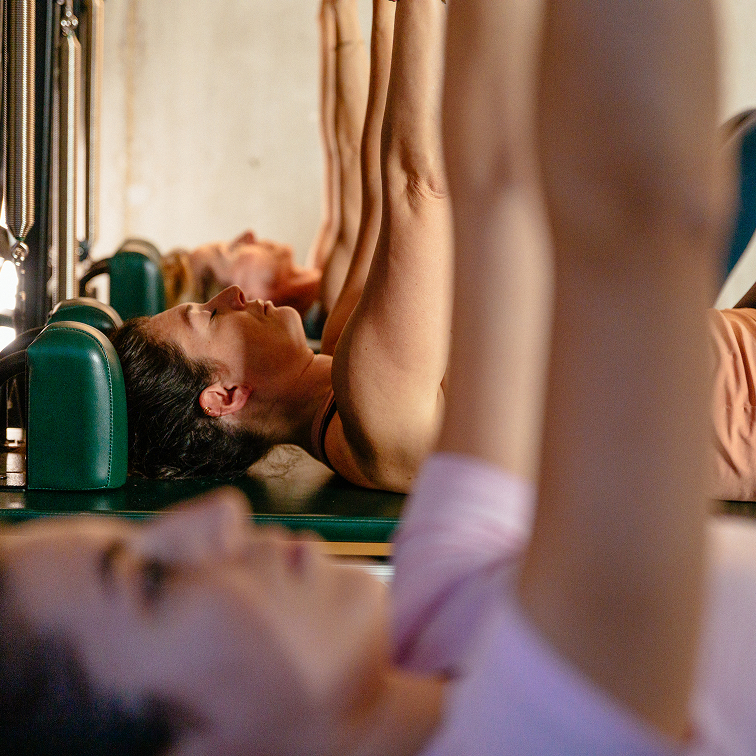
In practice, fascia-aware Pilates is not a separate method or a fixed set of exercises. It influences how we use the Reformer and other equipment, how we vary rhythm, resistance and direction, and how we help clients explore different movement patterns. The aim is to develop strength, mobility and body awareness while making movement feel more connected and adaptable.
This is one of the perspectives that shapes how we teach at Serratonin: Pilates as more than repeating positions, but as a way to understand the body and expand its options for movement.
